Double Take
Designer Zulu Williams on dandyism, Dapper Dan, and Harlem as New York’s “Fashion Mecca”

Met Gala couch critics and fashion nerds from all corners of the city can agree, springtime in New York obligates a trip to the annual Costume Institute exhibit. This year’s show, “Superfine: Tailoring Black Style” explores histories of Black menswear fashion through the lens of dandyism, a tradition characterized by elegance, flamboyance and fabulous self-expression, and fraught with resistance to prescripted stylings of race and gender. As the exhibit’s opening panel describes explains:
Black dandyism, by and large engaged with by men, sprung from the intersection of African and European traditions of dress and adornment. Its history - from Enlightenment England to the contemporary art and fashion worlds of Paris, London, and New York — reflects the ways in which Black people have used clothing and fashion to transform their identities, proposing new ways of embodying political and social possibilities.
While researching the show, I was intrigued by how this type of fashion offers a toolbox, a set of principles that built, evolved and defined cultural identity. And although sartorial, superfine, ultra-tailored dandyism differs from (and maybe inherently clashes with) the formal tenets of streetwear fashion, it struck me that both of these traditions continue to shape ideas and possibilities for Black masculinity. I wanted to consider the show with this thought in mind, so I copped two tickets and invited an expert on the subject, my father Zulu Williams, designer, streetwear legend and co-founder of PNB Nation.
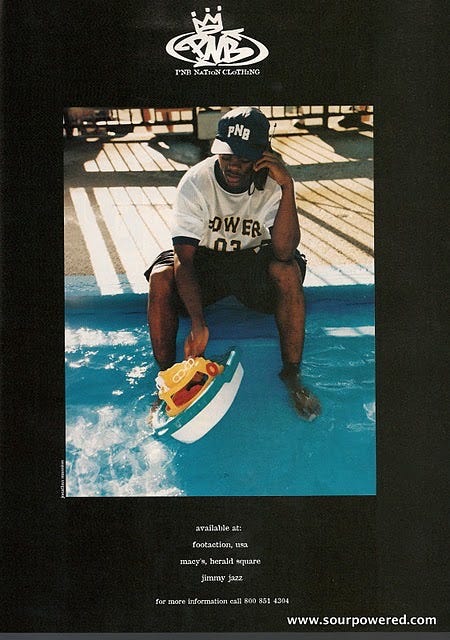
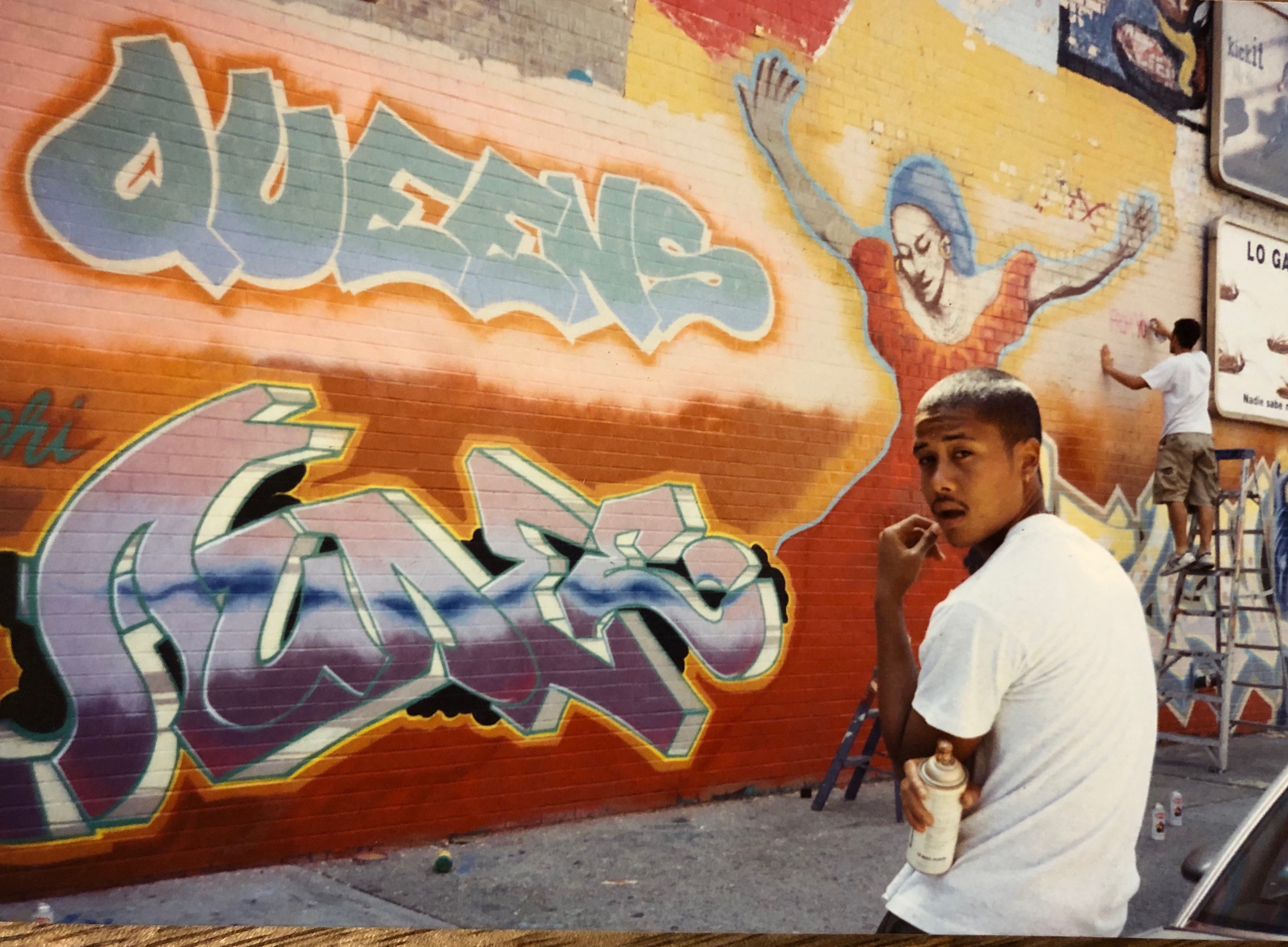
For those outside the know, a history lesson: PNB Nation was a pioneer streetwear brand emeritus of Harlem in the early ‘90s, which revolutionized culture from the underground - quite literally. Its founders, Brue, Bluster, West and Zulu, were card-carrying members of prolific Bronx graffiti crew FC (short for First Class or Fame City) who graduated from tagging trains to printing tees in the post-subway era. As the hip-hop movement grew to generate multiple forms of music, dance & art, fashion became a vehicle to virality that allowed these artists to leave new marks on New York. “It was a love letter to the culture, Zulu recalls, “The idea that you put your name up on the train and it travels around the city, the tee shirts were the same thing, they were traveling around the city in a different medium.”
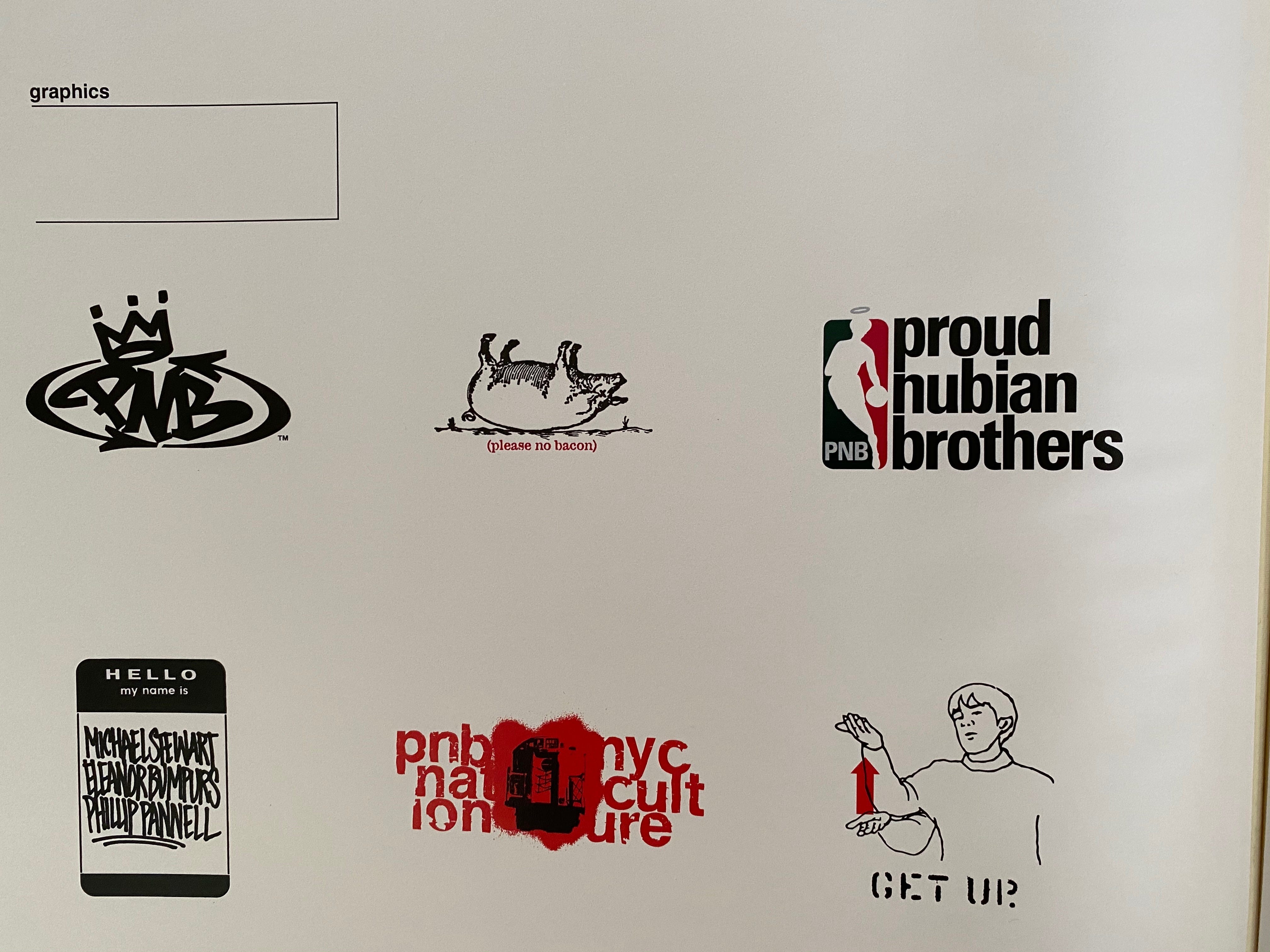
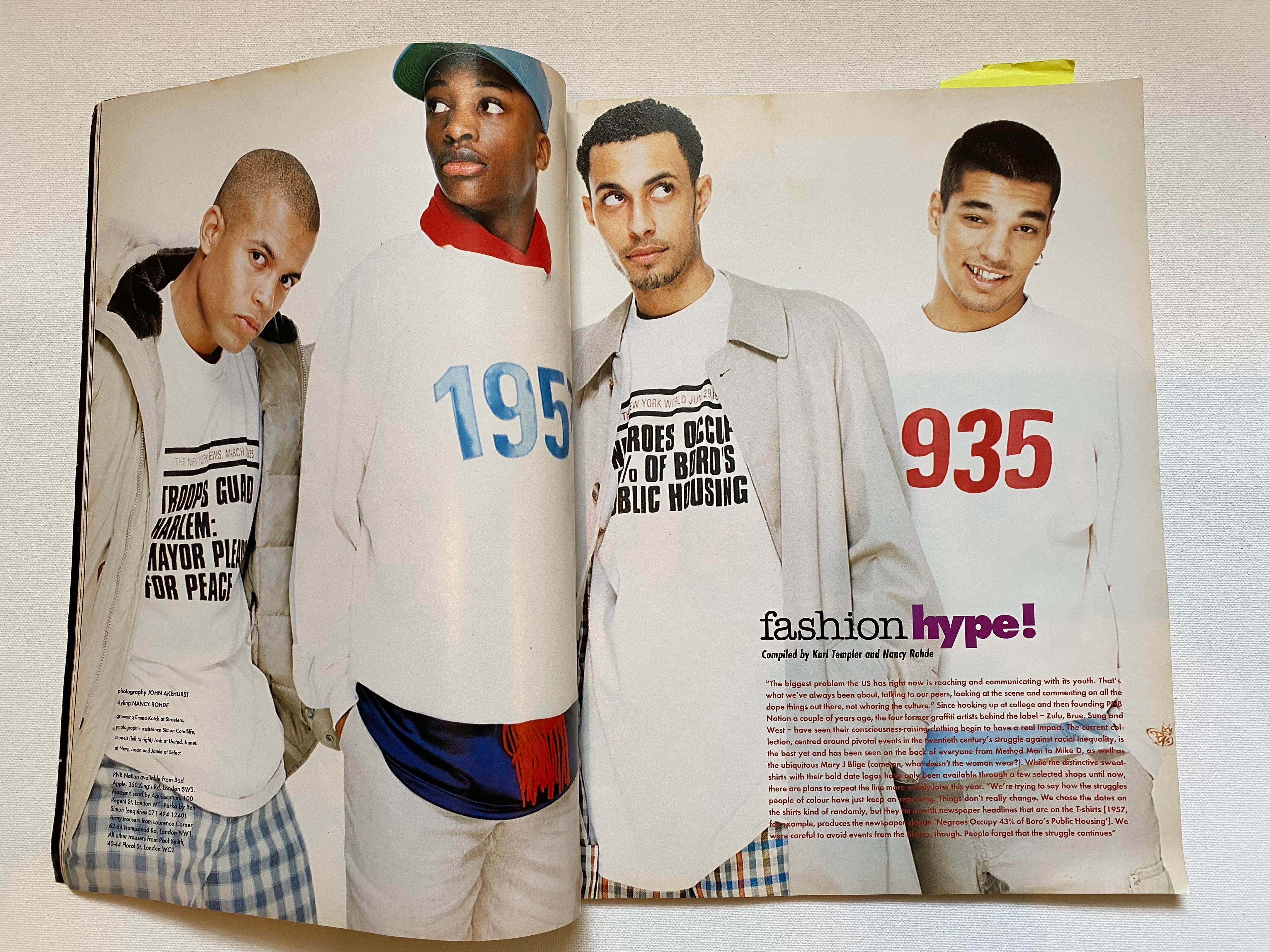
While city-wide notoriety may have been their main mission, the brand also aimed to spread politics of resistance across boroughs. From jump, PNB identified clothes as a clever means to encourage social consciousness. Instead of spoon-feeding statements to consumers, the founders signaled messages in their designs that inspired buyers to do the research, get hip to their significance; like the “My Name Is” tees that resembled stationery stickers and bore the names Eleanor Bumpers, Phillip Pannel and Michael Stewart, all victims of murder by cops and state agents, or the “Dates” series that connected dots between thoughtfully selected years in which historic acts of rebellion occurred, or the iconic upside down pig logo which riffed on Black Panther Party Minister Emory Douglas’ rendition of the animal as symbol for U.S. imperialism. Endlessly amendable and constantly evolving, the acronym PNB offered various slogans — Post No Bills, Proud Nubian Brothers, Please No Bacon — that nodded to disparate ethnic, artistic and political movements. Theirs was a quintessentially New York project, one that promoted solidarity between neighborhoods from Harlem to Loisada to Chinatown and pride in the vast cultural output created by their residents.
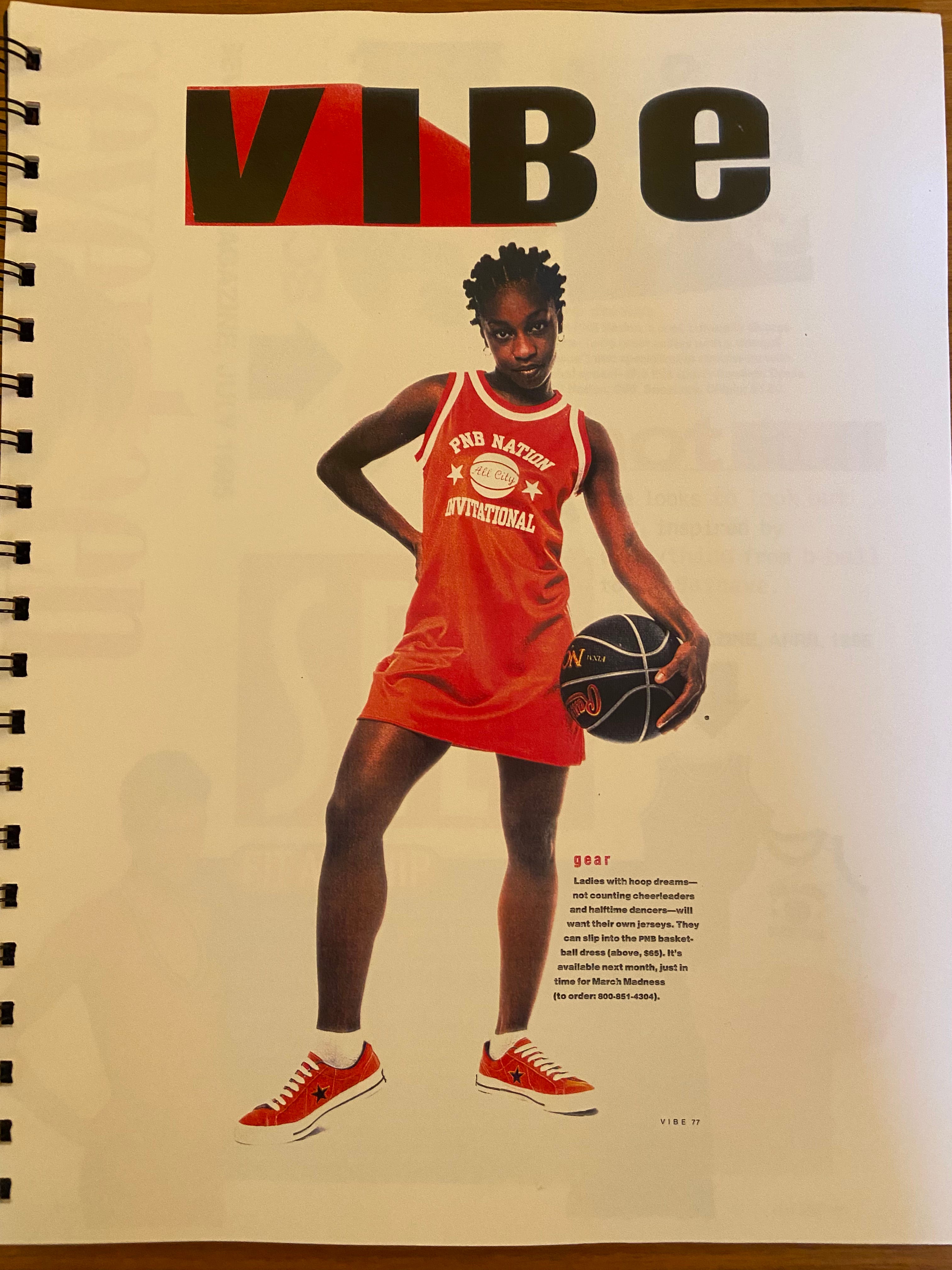
As one of the first daughters of PNB Nation, I’m enamored with — and really proud of! — my dad’s legacy and his contributions to hip hop culture. PNB came of age amongst the greats, sported by then-upcoming legends like TLC, Lauryn Hill, Aaliyah. Hell, even Eminem performed at the VMAs decked out in the brand. When I wear my prized possession, a letterman jacket they designed for the 1998 Miseducation tour, or take the 1 train, the same line that I grew up on and FC dominated decades ago, I think about how my intrinsic, unrelenting adoration for my city is heritage. I got it from my daddy.
After attending the Superfine show together, I sat down with dad to discuss Black menswear cultures, the intersections of dandyism and streetwear, and how growing up in Harlem directed him towards a life in fashion.
KNW: There’s a section in the show that talks about Harlem and how, across multiple time periods, Harlem is a space where black fashion cultures developed. So starting off, I just wanted to know: how did growing up in Harlem, or New York more generally, inform, inspire or develop your relationship to fashion?
ZW: I think the first thing that comes to mind, and maybe this is fresh off the Jonathan Mannion show and my favorite scene, which was shot in Harlem, the Bake Shop. When I saw that shot it really reminded me of the fashion of Harlem, or the garment that I first kind of gravitated to and really noticed, which was the tracksuit. That sort of hustler vibe of the tracksuits harkened back to Sergio Tacchini and Fila and those kind of looks and so that was what inspired the outfit that Harold Hunter is wearing in that shot. It was what I kinda associate as the fashionable Harlem fit from my childhood, or just growing up as a young kid in Harlem and seeing the hustlers out there with that tracksuit fit.
That’s what I remember, but, you know, 125th street was where people shopped. So there was also all the stores that had the mock-necks and the AJ’s, which were these slacks that had a contrast color in the side seam that was kinda tucked away inside, and of course the British Walkers and all of that, and the kangols. 125th street was like the Fashion Mecca. That was leading into the ‘80s, and then you go into the ‘90s and it was about the uniform and about the oversized white tee, the Uptowns, the Airforce 1s and how kids sort of flipped that by traveling down to like Washington DC, Philadelphia, and getting the different flavors of Airforces. And then bringing those back to up top, to New York. That’s something Clark Kent talked a lot about — Rest in Peace — you know, about driving down and copping all those flavors and bringing ‘em back up to Brooklyn. But yeah, sneaker culture, tracksuits and then in the ‘80s all the old school mock-necks and BBDs and AJ’s and whatnot.
KNW: That’s cool, so it’s like these outfits and individual iconic pieces that made an impression on you and were tied to specific people you were seeing every day. Did you want to possess those things, own them and dress like these people?
ZW: Oh yeah. And then in terms of how it influenced PNB, the other thing I didn’t mention was the basketball culture in Harlem. There was a place called Olafs where you would get your custom made shorts, or you would buy shorts that kids would play in when they went to tournaments, or the tournament tee shirt, that’s something that we played with at PNB Nation — like with making up teams like the Uptown Dons and the Brooklyn Roots, just doing our take on that aesthetic we were looking at. So it wasn’t the dandy that was our influence, cause dandies are almost like peacocks, right? But we were being influenced by the culture around us and doing our spin on it.
KNW: Yea, I was curious, were you aware of the concept of black dandyism before the show? Was the term ‘dandy’ part of your lexicon, did you ever hear it growing up? If so, who are the dandies that come to mind or that you think are notable when talking about Black style?
ZW: Oh yeah, for sure. Some of them were presented in the show, like Clyde Frazier is a perfect example. And of course the fashion of Dapper Dan, and when you think of Dapper Dan you think, like, Alpo Martinez and Rich Porter and all the gangsters who were, in a way, dandies. But you know what? I would probably also include Slick Rick. I went to high school at Music & Art, and Slick Rick was a senior when I was a freshman. And he was almost like a dandy. He was just that guy. He was that guy who was fresh dipped every single day and color coordinated and everything was impeccable in terms of the way he dressed and it was dandyism. It was super-fucking-superfine cloth, everything was perfect from like, the cazals and how they went back to his ballys or the sharkskin suits and all of that. So yea, when I think of the term as someone who went to high school — Music & Art was in Harlem at that time, on the campus of City College — I definitely think of the Kangol crew, which was Slick Rick, Dana Dane, and 4-5 other members. They were like the dandies of that moment.
“I would probably also include Slick Rick. I went to high school at Music & Art, and Slick Rick was a senior when I was a freshman. He was just that guy. He was that guy who was fresh dipped every single day and color coordinated and everything was impeccable in terms of the way he dressed and it was dandyism.”
KNW: For sure. I know that there’s distinctions — visual, formal etc. — between the subject matter of the show, which is this superfine, sartorial dandyism style with the emphasis on suits, tailoring and special occasions. There’s a distinction between that and streetwear, which feels kind of inherently casual or spiritually casual, and also visually relaxed too.
ZW: Yeah, I agree.
KNW: Do you think there’s also overlap between those two subcultures of Black style? Even though the show wasn’t about streetwear I was wondering if you saw or thought of any connections while experiencing the exhibit? Or what you think is the relationship between high fashion Black menswear and streetwear?
ZW: Dapper Dan would probably be the best example of that. You and I talked after the show and said that one of the takeaways was that idea of exaggeration. And if you look at Dapper Dan’s fashion — the puffy sleeves, the exaggerated details — I think that’s a good example of where the tailoring and streetwear, casual fashion intersect.
KNW: You brought up the importance of the athletic element in fashion and there was a section in the exhibit called “Championship” where they featured all the athletic inspired clothing. When I saw that I was thinking about my PNB jersey mini dress that used to belong to Mom, or even the top I’m wearing now, the PNB All City Invitational tee. And I was also thinking about the shirt that y’all made that says “Proud Nubian Brothers” but looks like the NBA logo. I was wondering what you think is the significance of the uniform in streetwear and menswear in general. Why are uniforms — whether they’re athletic, collegiate, military, such an enduring source of inspiration for designers?
ZW: That’s a good question. I think there are themes that are constant in terms of inspiration, obviously military, preppy, sports. But the thing about streetwear is there’s this constant play with appropriation. So the shirt that you just mentioned; it’s taking something that exists, like the tournament tee shirt or the NBA logo, and then appropriating it and putting a logo flip on it so people almost have to do a double-take. And just doing that slight tweak to it. And that is something that’s always been inherent to streetwear, every brand does that either in their logo or tee shirt graphics or some way. So I think the mesh basketball jersey dress or even the basketball shorts we did, everything was a riff off of that idea in other forms. But there’s just some things that never get old and themes and inspirations that will always be around.
KNW: Yea. Like maybe also because a uniform is something that is always going to have a function, there’s endless ways to remix it. Even like when kids wear school uniforms and make it their own. It’s like there’s always something to take from a default or template.
ZW: Yeah.
KNW: Speaking of appropriation, I feel like I have a memory of you telling me about how in early streetwear culture like the ‘80s and ‘90s, there were consumers that were obsessed with Ralph Lauren. Wasn’t there a name for someone who was obsessed with polos?
ZW: Yea, well in Brooklyn there was a crew called the Lo-Lifes. And they would dress head to toe in Ralph Lauren Polo. I don’t own the book, it’s almost impossible to get, I think you could get on eBay but it’s really difficult — but there’s a Lo-Life’s book. It’s like a coffee table book that kinda documents their story.
KNW: So they were just known for this kind of outfitting they were doing. When you call it a crew was this a specific membership type of thing? Or was it more of a cultural phenomenon that people were participating in?
ZW: No, I think it was a real crew with a president and all of that. I think the leader was Thurston Howell III, and it was an actual, legit crew. A large crew. They were pretty big.
KNW: I was thinking about that after the show, and I’m curious about your take on this because to me it seems like this crew was trying to take ownership of a brand that was very much not marketed for them at the time and for whom they were not the target audience.
ZW: Exactly.
KNW: To me, that kinda looks like a practice of taking the status symbols of an elite class — this white, wealthy male tradition of dress — and making it belong to Black people, but it’s still a status indicator. I was wondering if you could talk to me about the concept of claim and the practice of claiming? Because the exhibit also showcased a lot of historical instances where Black people were taking on fashion traditions that were created by white people, mostly reserved for white people, and that borrowing functioned as an act of resistance. But it feels like there’s a tension there, because it’s also appropriating a culture that is racist. Or maybe it feels like uplifting or capitulating to a standard, a hierarchy, that is oppressive. So what do you think of this cultural exchange of taking something that is in conflict with their class of the people who are trying to obtain it, these polos etc.?
ZW: One hundred percent. I think that’s exactly what it is. And I think that’s also a definition of streetwear; when a particular audience sees something that is not meant for them, they take it and they make it their own or they claim it like you say. That’s what Dapper Dan did, he’s an example of taking that luxury. Or kids even walking into Louis Vuitton and taking this luxury and flipping it and making it accessible. It’s an audience taking something that wasn’t intended for them. I totally agree with that. That’s part of streetwear but also hip hop as well. I think hip hop also does that and it’s part of the culture — I often equate it to sampling, taking something that’s obscure or random or not really meant for that particular audience and then reclaiming it and making it into something else that’s accessible to the culture.
KNW: And an expression of the culture.
ZW: Yeah, yeah, yeah.
“That’s also a definition of streetwear; when a particular audience sees something that is not meant for them, they take it and they make it their own or they claim it .”
KNW: The exhibit had a section where they showcased what they called “Black radical chic,” which was the styling of the Black panthers and other Black Power movement icons who honed distinct and recognizable aesthetics and were using fashion to communicate their messages. PNB was also extremely intentional and conceptualized around political consciousness, and y’all made statements with clothes and literally had your message communicated through slogans. Like, those slogans are statements. Or with the “My Name Is” tee shirts. And I think it’s also interesting that you were doing that work during and as a part of another Black cultural revolution, which is hip hop.
You were raised amongst Black Power Movements and activists as a member of the Kochiyama family, and even just as someone growing up in such a politicized place as Harlem in the 70’s, 80’s and ‘90s. I was wondering how that upbringing played into your creative process. Did you draw on your own familiarity and involvement with these movements to inform your designs, at PNB and beyond?
ZW: I can’t speak for the rest of the PNB Nation crew but my grandmother Yuri Kochiyama was definitely an influence. And I think the tenets of PNB also had connections to a lot of her tenets too; her life’s work in solidarity, her emphasis on studying history. Those principles were a big part of what we were doing and what inspired us. From the beginning with the upside down pig logo, that logo is on a sticker with Loisada, Boogie Down, Chinatown on it. That was solidarity. You know, I guess I can speak for the crew — that was something that resonated with all of us. This idea that we could represent all these different neighborhoods. Or that we could message to all these different neighborhoods and be on the same wavelength. I think that was something that I got from Yuri.
In terms of history, we did a series called the Dates series and it was all about connecting the dots from headlines of newspapers of what was going on in ’57, in ’47, in ’24 or whatever, that still was relevant to things that were going on in the current day. We were just going to the library and researching and picking those dates to put on the hangtags and shirts. You know, we did jackets, we did sweatshirts or fleece and the whole thing. And you know, on one of our main labels, it said “Free the land.” So we were definitely inspired by Yuri.
KNW: I didn’t know that solidarity was a practice you were thinking about when designing the clothes. It’s interesting because I think your crew, the founders, are also racially diverse and coming from different cultural backgrounds, so that’s fascinating to me that there was an intention around bringing multiple types of people into the culture.
ZW: Yeah, we practiced it but we also lived it, right? We were it. We were exemplified solidarity just from building together.
The other thing is my mother-in-law, Tomie (Arai). I remember just being a child walking in downtown Manhattan through Chinatown or the Lower East Side, and seeing those murals. Her murals were iconic. They were up for many, many years and they were so iconic to those neighborhoods — I remember being like, “Oh! I know her.” She was a huge influence, because PNB and FC are so interconnected. We painted murals, or walls rather, during those times together, cause the four of us were in both PNB and FC. And there was a wall we did — I think it was Avenue C — that really reminded me of Tomie’s work. It was this wall of our heroes or our icons, and it was a big wall on the side of, like, a C-Town or something. But yeah I think she also was an influence on PNB/FC, us painting together in those neighborhoods.
KNW: I love that. There was something you said that I loved in that presentation, it’s “It was a love letter to the culture. The idea that you put your name up on the train and it travels around the city, the tee shirts were the same thing, they were traveling around the city in a different medium.” It’s like a way of building upon the city.
ZW: It’s a way of getting up. So depending on who you ask, probably 8 out of 10 graffiti writers what their motivation was, they would say fame. Fame is getting up. So yea, the train era had ended so the shirts were a way of getting up. There was a rush of being somewhere and seeing, like, “I was there.”
KNW: Yeah, it’s like to gain virality pre-internet you had to make your mark with so much more effort, I’m sure. So then to see that mark traveling, spreading, remaining, continuing, that’s really cool.
“We practiced it but we also lived it, right? We were it. We were exemplified solidarity just from building together.”
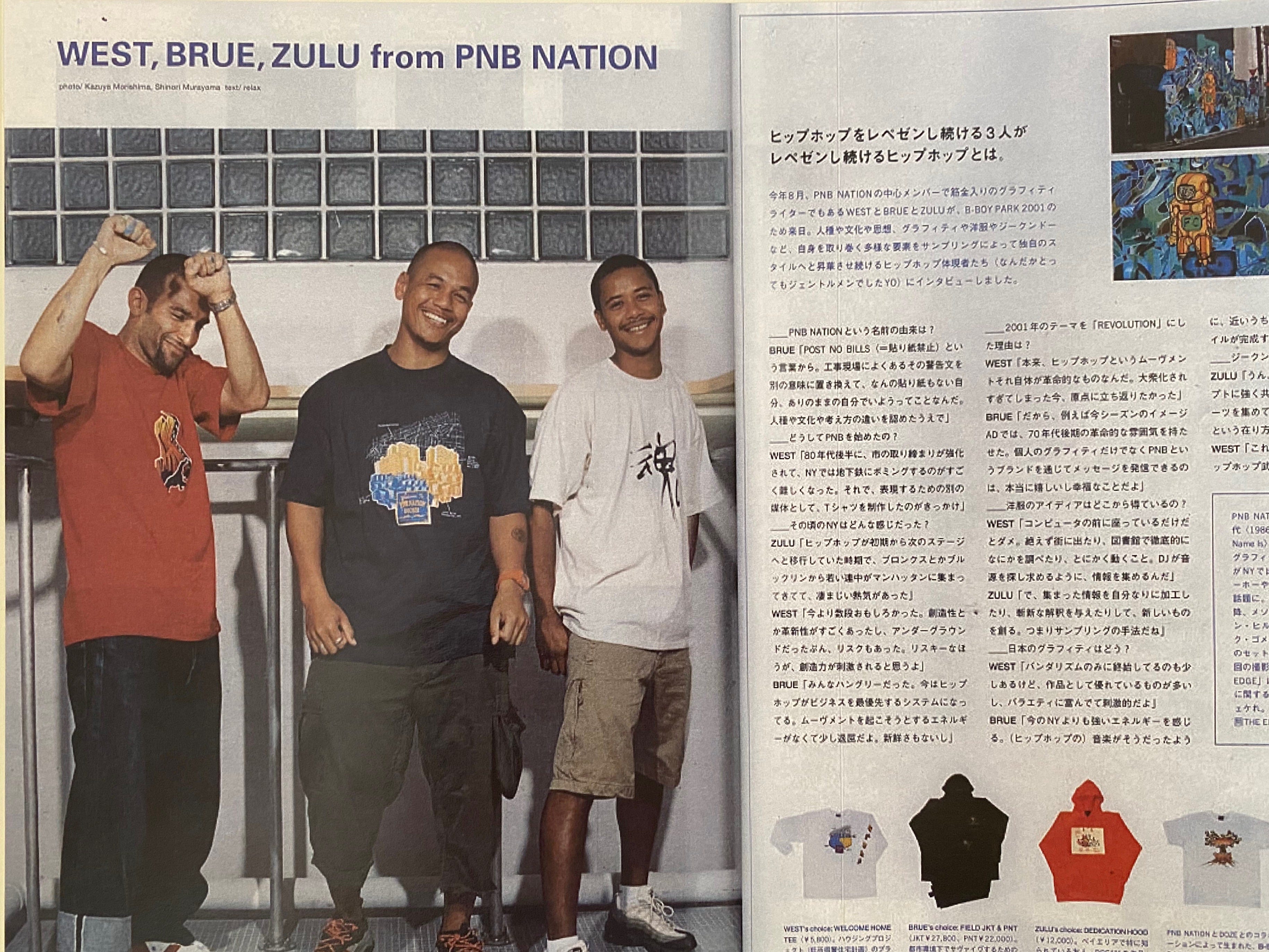
ZW: And then with PNB it went even further because we were blessed to go to Japan during those early years and then it was like PNB was twice, three times as big in Japan as in New York. So seeing people wearing it, like, getting up was on another level in Tokyo. Or we would go to Osaka and all these people everywhere, all these kids are wearing PNB and it’s like, whoa. I would have never even dreamed that. And so that feeling of getting up in those cities was on another level.
KNW: Do you have an idea of what you think it was that resonated with people over there?
ZW: You know, I think our [Japanese] people, when they get obsessed with something they really go in.
KNW: That’s true.
ZW: And the obsession with hip hop, and not just hip hop but — for example, take Mighty Crown. The Mighty Crown sound system was huge in Japan and they battle sound systems from Jamaica and Brooklyn and have won year after year after year. Because they really dig deep —
KNW: And study.
ZW: Yeah. When they get into something they really get into it so whatever was super underground hip hop in New York or this country, we would go to Japan and it would be on people’s radar. Whether it was a rapper or a song or some B-side that just came out…I’m making this up but like, a Noreaga or CNN, Capone n Noreaga, track that might be super under the radar here, no radio play, whatever. We would go to Osaka and walk in the club and they would be playing it. You know what I mean? We would bug out. It was the fashion, it was the music and all of that. We were way underground here but there it felt different, like we were much more arrived.
KNW: You were making art and developing as an artist before you were in fashion. Of course, you attended Music & Art, then became a graffiti writer and created PNB as an extension of the family you found in graffiti. So I’m interested in hearing about your journey between these different forms and disciplines of visual art and why you think you settled on fashion as your profession?
ZW: I knew as a very young kid that I always wanted to do something creative for a living. I knew that early on, which led me down the path of going to an art high school and an art college. When I got to college I thought what I wanted to do was graphic design and I did a short summer internship at a corporate advertising agency. And I was kinda turned off by it, I thought it was too corporate or whatever. So then Brue introduced me to Blust, I introduced him to West, and we started printing tee shirts at Cooper Union. I was going to school by day, printing shirts at night and when we took those tee shirts — you know, we would go to the Lower East Side and buy blanks and then print em — we took those around to consignment stores and we got a really good reaction to it. One of those stores was Union, James Jebbia, who went on to create Supreme, he and his wife, Mary Ann, a very influential shop called Union down in SoHo. And when we brought the tee shirts there I remember he was really into them, and we had been doing a consignment deal with all these other stores and he just bought ‘em straight out — we were like “Whoa.” And he called us a couple days later and said he sold out. So that kinda changed my path, that moment of like “Oh, maybe this is something I could learn.”
The reason I think I stayed in fashion or landed there is because through that experience I was blessed to be able to travel overseas and be in the laundries, be in the factories, be in these other countries developing product and learning. Cause I knew nothing going into it. We knew nothing but we had some friends in the industry and they taught us things. It was really trial and error and rolling up our sleeves and getting into it and just being a sponge. That travel and those experiences of developing product was something I latched onto. And I was never able to shake it.
KNW: The exhibit text says a dandy is a person who “studies above everything else to dress elegantly and fashionably.” So my question is, when you want to dress up or dress elegantly, what is your thought process as you put an outfit together? Are there specific colors, fabrics, accents you gravitate towards?
ZW: Probably all of the elements come into play: color first, material, details and silhouette and all of those elements go into it. It could be that what I’m seeing around that might influence the color, but I do have a favorite, which is olive green. Usually what’s in my closet reflects that, and I love anything indigo. So, you know, it depends. I try to stay probably classic, maybe classic with a slight twist. I try to not overthink it.
KNW: Just kinda go with how you feel?
ZW: Yea, but you know, it’s tricky because the recent shift in menswear is that the silhouette has gotten quite relaxed. I don’t have a lot of suits that are relaxed, just a few. I’ve been meaning to update. Cause I would never go out now wearing 80%, 90% of the fit of the suits in my closet, right?
KNW: Oh interesting.
ZW: So maybe that’s the first thing I think about, silhouette. I can’t look crazy. There’s a lot of men out there whose eyes haven’t adjusted and they are still wearing very slim fitting silhouettes but I feel like most people have accepted it’s a little more relaxed.
KNW: So how do you figure out when and how much to adjust? But also maintain a preference for what’s classic? How do you decide when to pivot or maybe when not to go towards the direction of what’s popular at the moment? Because obviously in your job you are constantly looking ahead and making products that are at the forefront of trends, so how do you decide how much to adjust in your own personal style?
ZW: So, the customer of the brand that I work on is a lot slower, a much slower adaptor. He’s not a fashion guy, he’s not gonna wear it first, he needs time to adjust. He has to see it and it has to make sense, right? He has to watch White Lotus and see a floral shirt before he gets one. Or maybe the guys he hangs out with, maybe one of them is wearing a floral shirt. He might think, oh maybe I can pull off a floral shirt, but he needs that validation over and over. So I think I’m a little more ahead of that in terms of what I would wear. I won’t go too far ahead or too fast but I’ll be conscious of what someone in the industry will wear.
KNW: So there’s a middle-ground between being ahead or being first and being late.
ZW: Yeah, like, let’s say in terms of jeans — I wouldn’t go as far as what Kendrick Lamar wore at the Superbowl. But I would maybe somewhere in the middle of that and a regular bootcut. You know what I mean?
KNW: It’s nuances there.
ZW: Yea, like I see that that’s amazing and aspirational, but where can I land that’s not quite there?
KNW: Okay my last question is just generally, what are your final thoughts on and your impression of the show? Did you have pieces or designers or notable figures that you remember? Did you learn anything new?
ZW: I saw it twice, the first time really the takeaway for me was just all the history that I was impressed with, all the things I learned that I didn’t know — like Ellen and William Craft. I didn’t know about Air Afrique, I’d seen the Sanlé Sory photographs but didn’t really pick up on the bag. So whether it was things I didn’t know, like the Black jockeys that were enslaved — it was just an amazing amount of history I was able to take away from it.
But then the second time it was that motif of exaggeration, with Long Tail Blue or the sharp shoulders of the Zoot suit, some of the Dapper Dan stuff, there was just this thread of exaggeration and a lot of it was with fit or silhouette, but also the macaroni’s with the green jacket and pink shirt, or the sword of the Haitian general we kept talking about. Like just taking the elements of fashion from white European world and then doing something to exaggerate and then throw it back into their face, that sense of empowerment and satirizing. It was like, oh okay, Clyde Frazier, I get it. I totally get it.